
Space exploration has always captured the human imagination. From the earliest sci-fi dreams to the advanced starships of the future, we’ve always wondered what lies beyond our world — and how we might get there. Among the many vessels imagined in futuristic fleets, one stands out as a powerful symbol of innovation and bold engineering: the New Orleans Class Starship.
In the universe of Star Trek, starships aren’t just vehicles. They represent philosophy, diplomacy, science, and survival. The New Orleans Class Starship reflects all of these values while introducing a unique and practical approach to galactic design.
we’ll explore the origins, design philosophy, technical features, historical significance, and lasting impact of the New Orleans Class Starship. Whether you’re a lifelong Trekkie or just curious about advanced starship design, this article will give you deep insights into why this vessel represents a bold new era in galactic engineering.
ALSO READ: Los Bridgerton El Duque Y Yo Analisis: A Romantic Breakdown
Origins Of The New Orleans Class Starship
Star Trek: The Next Generation introduced audiences to a wide range of starship classes within the United Federation of Planets. Among these was the New Orleans Class Starship — a vessel that quietly made its mark during a critical period in Federation history.
The New Orleans Class was developed during the late 24th century, a time when the Federation faced increasing threats and expanding frontiers. Unlike larger exploration cruisers such as the Galaxy-class, this ship was designed for versatility, efficiency, and tactical adaptability.
It gained attention particularly during the events surrounding the Battle of Wolf 359, one of the most devastating confrontations between Starfleet and the Borg. Ships of this class participated in that battle, highlighting their active role in Federation defense strategy.
The Design Philosophy Behind The New Orleans Class
Compact Yet Capable
One of the defining features of the New Orleans Class Starship is its compact size. In contrast to massive explorers like the USS Enterprise-D, the New Orleans Class was designed as a mid-sized vessel capable of handling both scientific missions and defensive operations.
This balance reflects a key design philosophy: multi-role adaptability.
Rather than specializing in one mission profile, the New Orleans Class was engineered to:
- Conduct deep-space scientific research
- Support tactical operations
- Patrol Federation borders
- Provide rapid-response deployment
This flexibility made it an essential part of Starfleet’s diversified fleet structure.
Modular Engineering
Another major innovation was its semi-modular design. The ship features three distinctive forward-mounted pod structures attached to the saucer section. These pods are believed to serve multiple functions, including:
- Enhanced sensor arrays
- Additional torpedo launch systems
- Mission-specific equipment modules
The modularity concept suggests Starfleet was moving toward more customizable starships — vessels that could be refitted quickly depending on mission needs.
This forward-thinking engineering approach truly marks the New Orleans Class Starship as part of a bold new era in galactic design.
Structural Overview And Visual Identity
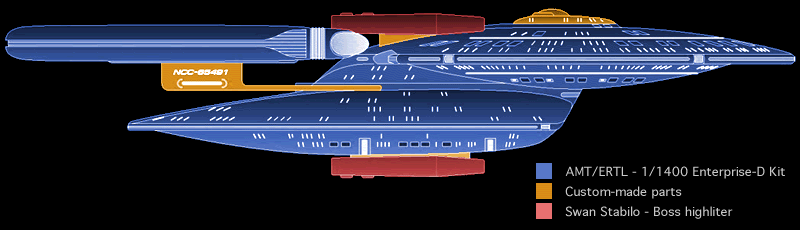
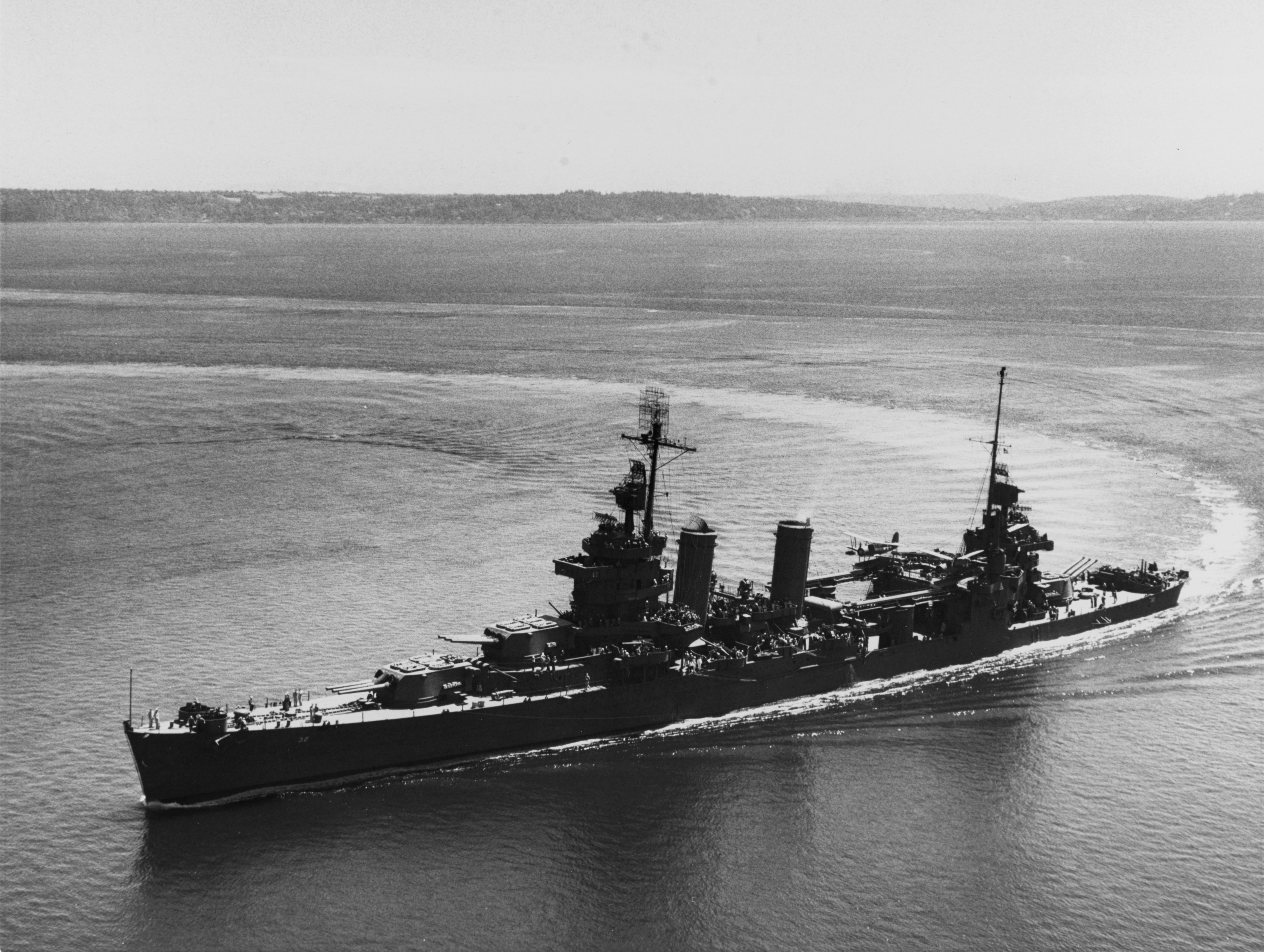
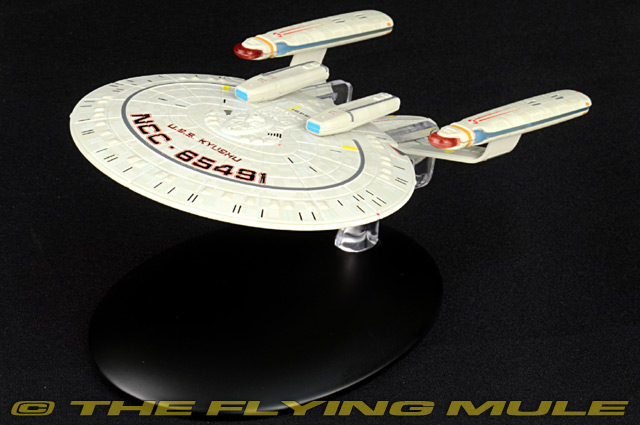
At first glance, the New Orleans Class may resemble other Federation starships. But look closer, and its unique profile becomes unmistakable.
Key Structural Components:
Saucer Section
The saucer houses the main command deck, crew quarters, research labs, and primary operational centers.
Triple Forward Pods
These are the class’s most distinctive visual elements. Their positioning suggests offensive capability, though they likely serve multi-purpose roles.
Secondary Hull
Connected via a narrow neck, the engineering hull contains warp systems, power distribution networks, and shuttle bays.
Warp Nacelles
Twin nacelles extend from the engineering hull, providing faster-than-light propulsion through warp field generation.
The overall aesthetic maintains the classic Federation design language: sleek, functional, and purposeful.
Tactical Capabilities: More Than Just A Science Vessel
While often categorized as a light cruiser or frigate-type vessel, the New Orleans Class Starship demonstrates significant tactical strength.
Weapon Systems
Though exact specifications are limited, analysts within the Star Trek universe suggest:
- Multiple photon torpedo launchers (likely integrated into the forward pods)
- Standard phaser arrays
- Defensive shield grids comparable to similarly sized vessels
Its participation in the Battle of Wolf 359 proves it was trusted in high-risk engagements.
Defensive Engineering
Unlike heavy cruisers designed for prolonged battles, the New Orleans Class likely relied on:
- Agility and maneuverability
- Rapid tactical response
- Coordinated fleet operations
This strategy aligns with Starfleet’s broader defensive doctrine — strength through unity and coordination rather than brute force alone.
Scientific And Exploratory Roles
Despite its tactical strengths, the New Orleans Class was not solely a combat vessel.
Research Capabilities
Starfleet vessels are always equipped for scientific exploration, and this class was no exception. Its internal configuration likely included:
- Astrometrics labs
- Xenobiology research facilities
- Stellar cartography stations
- Planetary survey equipment
Its medium size made it ideal for missions that required both protection and research capability.
Border Patrol and Federation Security
During times of political uncertainty in the late 24th century, Starfleet needed ships capable of:
- Monitoring neutral zones
- Responding to distress signals
- Supporting diplomatic convoys
- Reinforcing vulnerable colonies
The New Orleans Class Starship fit perfectly into this operational niche.
Comparison With Other Starfleet Classes
To understand the importance of the New Orleans Class Starship, it helps to compare it with other well-known designs.
Galaxy-Class vs. New Orleans Class
Galaxy-class vessels were massive exploration cruisers built for long-term deep space missions. They carried families, vast laboratories, and large crews.
By contrast, the New Orleans Class:
- Carried a smaller crew
- Focused on tactical flexibility
- Required fewer resources
- Allowed faster deployment
Where the Galaxy-class represented grandeur and exploration, the New Orleans Class represented adaptability and strategic readiness.
Nebula-Class Similarities
Nebula-class ships also featured modular components, particularly mission-specific pods. However, the New Orleans Class took this concept further with forward-mounted pod structures that emphasized tactical utility.
This evolution in design signals a broader shift in Starfleet engineering philosophy during the late 24th century.
The Symbolism Of The New Orleans Class Starship
Beyond technical specifications, this vessel represents something deeper.
A Reflection of Changing Times
The late 24th century was not a peaceful era. The Federation faced:
- Borg incursions
- Cardassian tensions
- Romulan maneuvering
Starfleet could no longer rely solely on large exploration cruisers. It needed ships that could pivot between peacekeeping and defense instantly.
The New Orleans Class Starship symbolizes that transition — a bridge between idealistic exploration and pragmatic defense strategy.
Engineering Innovations That Set It Apart
Mission-Specific Pod Configuration
The triple-pod layout offered scalable mission upgrades.
Streamlined Hull Design
Reduced mass likely improved maneuverability.
Fleet Coordination Focus
Optimized for multi-ship engagement scenarios rather than solo dominance.
Efficient Resource Allocation
Smaller size meant lower operational costs while maintaining mission effectiveness.
These innovations demonstrate why this vessel is often described as marking a bold new era in galactic design.
Why The New Orleans Class Still Matters Today
Even decades after its appearance in Star Trek: The Next Generation, the New Orleans Class Starship remains a favorite among fans.
It Represents Practical Innovation
Instead of being the biggest or most glamorous, it represents intelligent design choices made under pressure.
It Embodies Federation Ideals
Even with increased tactical capabilities, it maintains Starfleet’s core mission:
- Exploration
- Diplomacy
- Scientific advancement
- Defense of peace
It Shows Evolution in Storytelling
Its inclusion during pivotal events like the Battle of Wolf 359 added realism and depth to the Federation fleet structure.
The Legacy Of The USS New Orleans
One of the most notable ships of this class was the USS New Orleans. Though it met a tragic fate during the Borg conflict, its sacrifice symbolized Starfleet’s courage and resilience.
The destruction of ships like the USS New Orleans reinforced the severity of the Borg threat and reshaped Federation military strategy moving forward.
A Bold New Era In Galactic Design
The phrase bold new era isn’t just marketing language — it genuinely describes what the New Orleans Class Starship represents.
It was:
- Smaller but smarter
- Tactical but exploratory
- Efficient yet powerful
- Designed for a changing galaxy
In many ways, it laid groundwork for later Starfleet innovations. Its blend of adaptability and mission flexibility influenced future vessel classes that continued refining this hybrid design philosophy.
Conclusion
The New Orleans Class Starship stands as a testament to evolution in galactic design. Introduced during a turbulent period in Federation history, it embodied adaptability, resilience, and forward-thinking engineering.
Rather than relying on sheer size or overwhelming firepower, it demonstrated the power of flexibility. Its modular elements, balanced mission profile, and fleet-oriented tactical design reflect a mature and strategic approach to space exploration and defense.
In the vast history of Starfleet vessels, the New Orleans Class may not be the largest or most famous. But it represents something equally important — a turning point. A shift in mindset. A bold step into a new era of starship design.
And in a galaxy filled with unknowns, adaptability may be the most powerful innovation of all.
FAQs
What is the New Orleans Class Starship?
The New Orleans Class Starship is a mid-sized Starfleet vessel introduced in Star Trek: The Next Generation. It was designed for multi-role missions, combining scientific exploration with tactical defense capabilities.
What makes the New Orleans Class different from the Galaxy-class?
Unlike the much larger Galaxy-class vessels, the New Orleans Class is more compact and focused on tactical flexibility and rapid deployment rather than long-term deep-space exploration with civilian passengers.
Was the New Orleans Class used in major battles?
Yes. Ships of this class participated in the Battle of Wolf 359 against the Borg, highlighting their active role in Federation defense operations.
What are the three forward pods on the ship?
The three forward pods are believed to house mission-specific equipment, enhanced sensors, or additional torpedo systems, reflecting the ship’s modular design philosophy.
Why is the New Orleans Class considered a bold new era in galactic design?
It represents a shift toward adaptable, multi-role starships capable of handling both scientific and tactical missions efficiently — marking a strategic evolution in Starfleet engineering.
ALSO READ: Exploring The Poison Funguar La Theine Location Safely