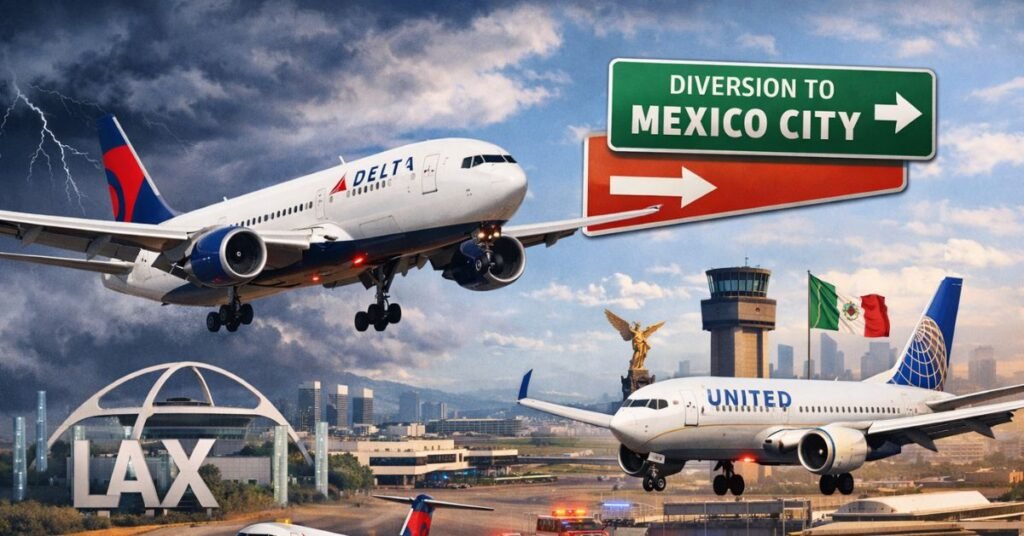
Airline diversions often make headlines, especially when flights like Delta Flight DL275 diverted LAX, United Flight UA109 diversion, or Delta Connection DL3543 emergency landing occur. While the word diversion may sound alarming, it is usually a routine safety decision made by pilots and airline operations teams.
In simple terms, a flight diversion happens when an aircraft lands at a different airport than originally planned. The reason is almost always safety, operational efficiency, or passenger well-being.
Understanding why these diversions happen—and what airports like Los Angeles International Airport and Mexico City International Airport play in aviation operations—helps travelers see the bigger picture behind these events.
This guide explains how diversions work, why they happen, and what passengers should know.
Why Flight Diversions Matter
Air travel is one of the safest forms of transportation in the world. Diversions are actually a sign that safety systems are working exactly as intended.
Modern aviation prioritizes:
- Passenger safety
- Aircraft performance monitoring
- Weather risk management
- Airport operational efficiency
When conditions change mid-flight, pilots may decide to land somewhere else rather than risk continuing to the original destination.
For example:
- Delta Flight DL275 diverted to LAX demonstrated how airlines use major hubs as backup landing points.
- United Flight UA109 diversion highlighted how operational decisions are made quickly when technical or medical issues arise.
- Delta Connection DL3543 emergency landing showed how regional flights follow the same strict safety procedures as large international flights.
Key Insights About Flight Diversions
Understanding aviation diversions comes down to a few key points.
1. Safety Always Comes First
Airlines follow strict international safety protocols.
2. Diversions Are More Common Than People Think
Thousands of flights divert every year worldwide.
3. Most Diversions Are Precautionary
Many happen before a problem becomes serious.
4. Large Airports Act as Strategic Backup Locations
Airports such as Los Angeles or Mexico City often serve as diversion hubs.
How Flight Diversions Actually Work
When something unexpected happens during a flight, several teams begin coordinating immediately.
1. The Pilot Evaluates the Situation
Pilots constantly monitor:
- Aircraft systems
- Weather radar
- Air traffic control instructions
- Passenger medical needs
If something changes, the captain consults with airline operations.
2. Airline Operations Teams Analyze Options
Airlines consider:
- Nearest suitable airports
- Runway length requirements
- Fuel reserves
- Maintenance facilities
- Passenger services
For example, LAX is frequently used because it has:
- Long runways
- Multiple terminals
- 24/7 operations
- Major airline support infrastructure
3. Air Traffic Control Coordinates the Diversion
Air traffic controllers guide the aircraft safely to the new destination.
They provide:
- Weather updates
- Traffic spacing
- Landing priority if necessary
Common Reasons Flights Get Diverted
Diversions can happen for several reasons.
Weather Conditions
Severe weather is the most common cause.
Examples include:
- Thunderstorms
- Heavy fog
- Strong crosswinds
- Hurricane systems
If weather blocks a destination airport, aircraft may divert to a nearby city.
Medical Emergencies
If a passenger becomes seriously ill, pilots may divert to reach medical help faster.
Typical situations include:
- Heart attacks
- Severe allergic reactions
- Breathing emergencies
Mechanical Precautions
Aircraft systems constantly monitor performance.
Pilots may divert if they detect:
- Engine irregularities
- hydraulic warnings
- cabin pressure issues
- sensor alerts
Often the aircraft is perfectly safe—but airlines prefer to inspect it immediately.
Airport Congestion or Runway Closures
Busy airports sometimes experience:
- runway closures
- air traffic delays
- emergency situations on the ground
In those cases, flights may land elsewhere until the situation clears.
Case Examples: DL275, UA109, and DL3543
Let’s look at what these commonly searched aviation events represent.
Delta Flight DL275 Diverted to LAX
This diversion illustrates how major hubs are used for safety landings.
Reasons for diversions to Los Angeles may include:
- Pacific weather systems
- technical alerts
- operational checks
Large hubs are ideal because maintenance crews and spare aircraft are available.
United Flight UA109 Diversion
Long-haul international flights like UA109 often cross multiple weather systems and airspaces.
Diversions during these routes typically involve:
- medical emergencies
- weather at the destination
- technical checks
Because long flights carry more fuel, pilots usually have several alternate airport options.
Delta Connection DL3543 Emergency Landing
Regional flights operate shorter routes but follow the same safety protocols.
Emergency landings can occur if:
- a warning light activates
- cabin pressurization needs inspection
- pilots detect unusual aircraft readings
In most cases, the landing is controlled and precautionary.
Practical Tips for Passengers During a Diversion
If your flight diverts, staying calm and informed helps.
What Passengers Should Do
- Follow crew instructions
- Stay seated during landing
- Monitor airline app notifications
- Contact family once you land
Airlines usually provide assistance such as:
- meal vouchers
- hotel accommodations
- rebooking options
Real-World Aviation Infrastructure: The Role of Mexico City
Major international airports like Mexico City International Airport in Distrito Federal play an important role in diversion networks.
Airports chosen for diversions typically have:
- long runways
- international customs facilities
- aircraft maintenance teams
- high air traffic capacity
Mexico City’s airport is one of the busiest in Latin America and frequently serves as an alternate landing point for transcontinental flights.
Best Practices for Aviation Safety in 2026
The aviation industry continues improving diversion management with new technologies.
Key advancements include:
Predictive Aircraft Monitoring
Airlines now use AI-based maintenance systems that detect issues before they become problems.
Advanced Weather Forecasting
Real-time satellite weather data allows pilots to adjust routes earlier.
Smarter Flight Planning
Airlines analyze:
- fuel efficiency
- alternate airports
- traffic patterns
This helps minimize disruption if a diversion becomes necessary.
Common Misconceptions About Flight Diversions
Many travelers misunderstand what diversions mean.
Myth: Diversions Mean Something Is Seriously Wrong
Reality:
Most diversions are precautionary decisions.
Myth: Emergency Landings Mean Danger
Reality:
An “emergency landing” often simply means priority landing procedures were used.
Myth: Airlines Divert Only as a Last Resort
Reality:
Airlines prefer early diversions to avoid larger risks.
Future Trends in Aviation Diversion Management
The future of aviation will make diversions even safer and more efficient.
Key trends include:
AI-Driven Flight Operations
Airline control centers increasingly use AI to analyze weather, traffic, and aircraft performance.
Autonomous Maintenance Diagnostics
Aircraft systems will automatically report issues to ground teams before landing.
Smarter Global Air Traffic Systems
Next-generation air traffic systems will allow faster rerouting across continents.
Conclusion
Events like Delta Flight DL275 diverted to LAX, United Flight UA109 diversion, and Delta Connection DL3543 emergency landing highlight how modern aviation prioritizes safety above everything else.
Flight diversions are not signs of failure—they are evidence of a highly advanced safety system working exactly as designed.
With the support of major airports like Los Angeles International Airport and Mexico City International Airport in Distrito Federal, airlines have the infrastructure needed to respond quickly to changing conditions.
For travelers, the key takeaway is simple:
A diversion means the system is protecting you.
And in aviation, that is always the right outcome.