When people think about Disneyland today, they picture dazzling parades, cutting-edge rides, and a park that feels almost like a world of its own. But back in 1955, when Disneyland first opened its gates, everything began with something much simpler — a map.
The Disneyland 1955 map wasn’t just a guide to attractions. It was a blueprint of imagination. It showed visitors a bold new idea: a theme park divided into immersive lands, each with its own story, atmosphere, and adventure. This was something the world had never seen before.
we’ll take a deep dive into the original Disneyland 1955 map — what it looked like, what it included, why it mattered, and how it continues to inspire Disney fans and collectors today.
ALSO READ: New Orleans Class Starship: A Bold New Era In Galactic Design
The Birth Of Disneyland In 1955
On July 17, 1955, Walt Disney introduced the world to something revolutionary. Unlike traditional amusement parks filled with random rides and carnival games, Disneyland was carefully designed as a storytelling experience.
And the map was the key.
The original Disneyland 1955 map helped guests navigate five themed lands arranged around a central hub. This “hub-and-spoke” layout became one of the most influential design concepts in theme park history.
Let’s explore those original lands.
The Five Original Lands On The 1955 Map
The Disneyland 1955 map featured five distinct lands radiating from a central plaza:
Main Street, U.S.A.
Adventureland
Frontierland
Fantasyland
Tomorrowland
Each land had its own visual style and attractions — and the map beautifully illustrated them.
Main Street, U.S.A.: Stepping Into The Past
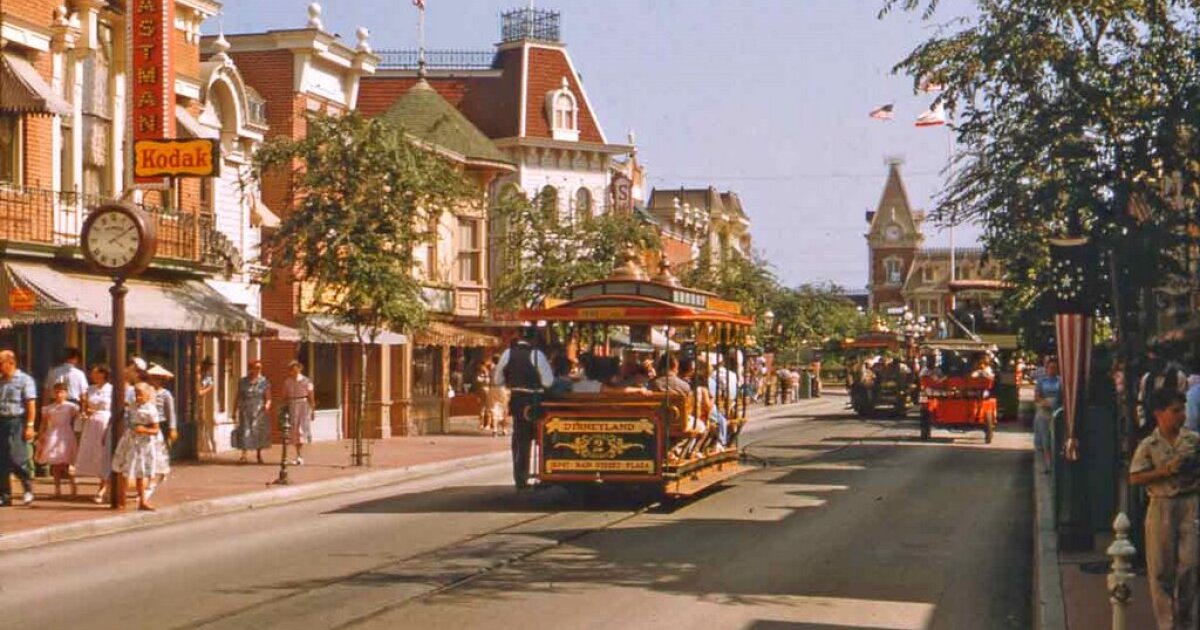


Main Street, U.S.A. was inspired by Walt Disney’s childhood hometown of Marceline, Missouri. On the 1955 map, this area appeared as the welcoming entrance to the park.
Guests would pass under the Disneyland Railroad station and walk into a charming early-20th-century American town. Attractions included:
- Disneyland Railroad
- Horse-drawn streetcars
- Penny arcades
- The Main Street Cinema
The map illustrated Main Street as warm and nostalgic — a soft introduction before guests ventured into more adventurous lands.
Adventureland: Exploring The Exotic Unknown
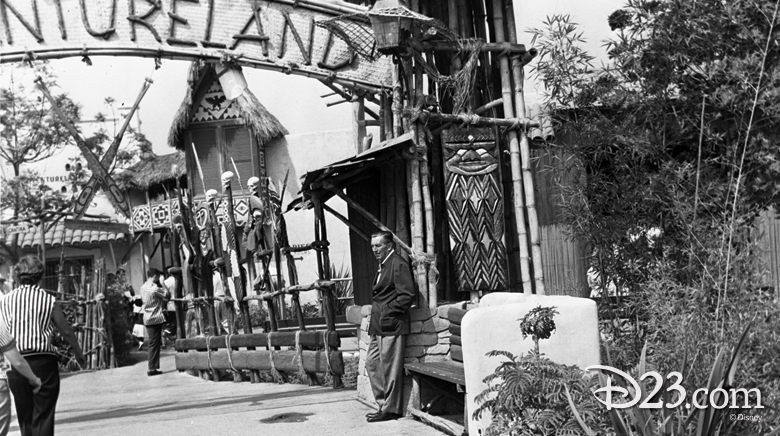
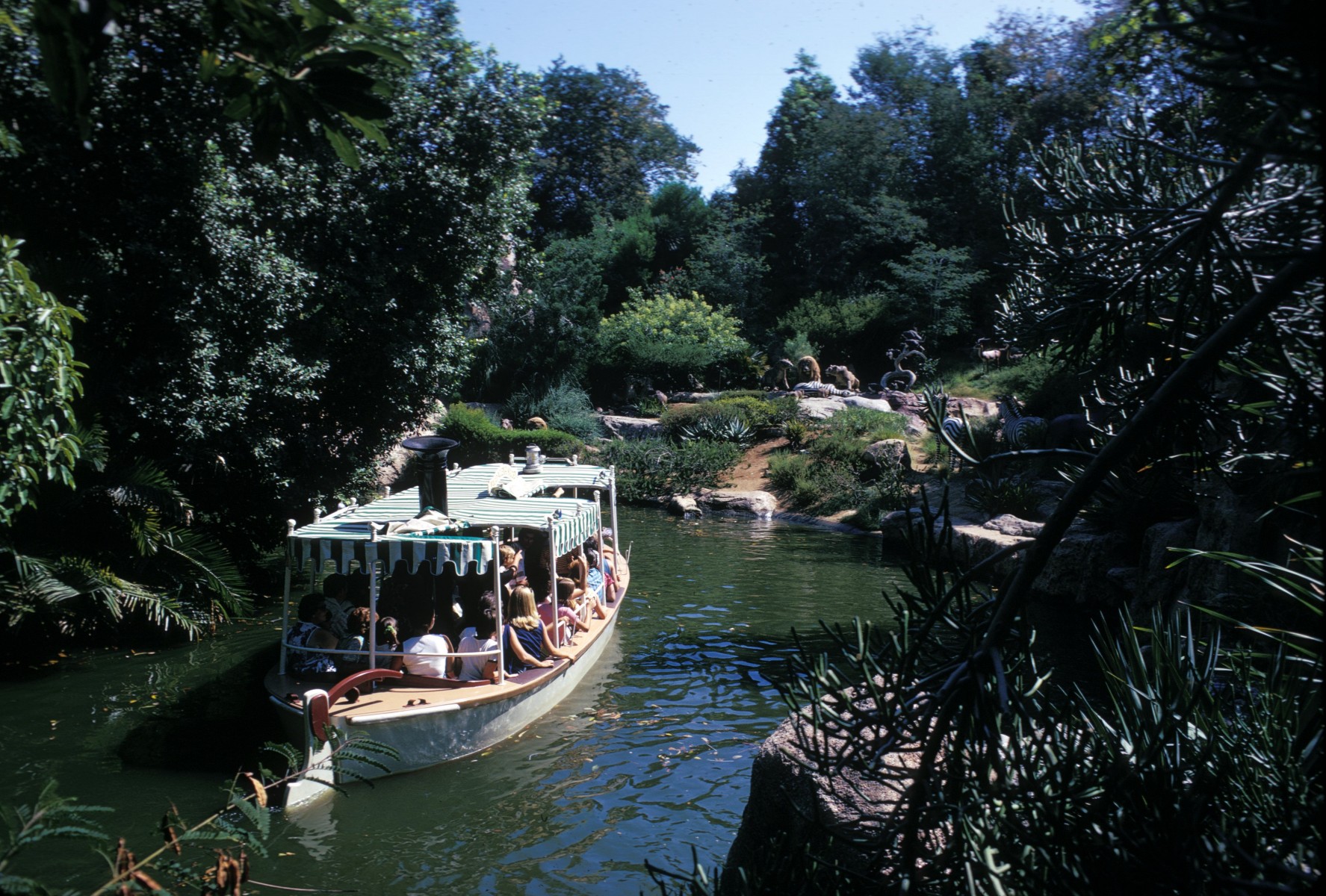
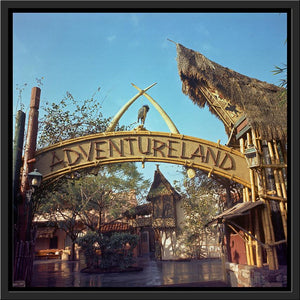
Adventureland on the Disneyland 1955 map promised exploration and mystery. Inspired by jungle adventure films and documentaries, it transported visitors to distant lands.
The main attraction at opening was:
- Jungle Cruise
The Jungle Cruise quickly became a fan favorite. On the 1955 map, Adventureland looked lush and wild — filled with trees, rivers, and exotic structures.
Even with only one major ride at opening, Adventureland felt immersive and complete. The map’s artwork helped guests imagine the adventure before they even stepped foot inside.
Frontierland: The Spirit Of The American West


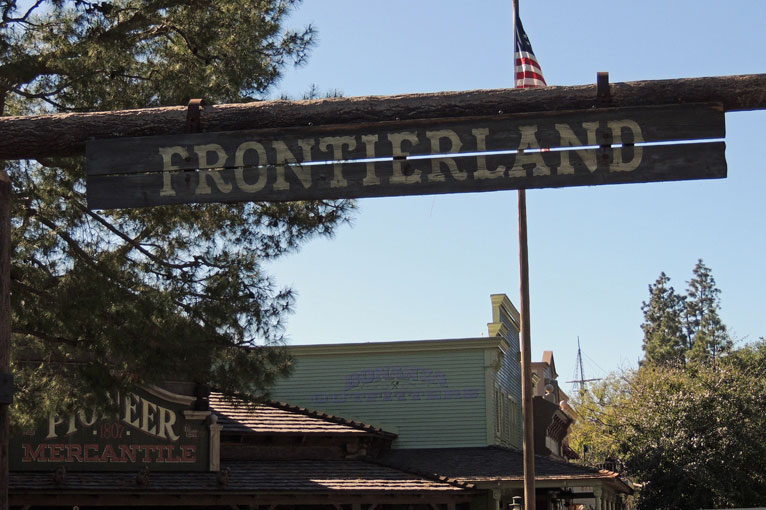
Frontierland celebrated the mythic American frontier — cowboys, rivers, and rustic settlements.
Opening-day highlights included:
- Mark Twain Riverboat
- Frontierland Shootin’ Gallery
- Mule Pack rides
The Disneyland 1955 map showed Frontierland along the Rivers of America. The Mark Twain Riverboat was prominently illustrated, emphasizing its importance as one of the park’s signature experiences.
The land reflected America’s fascination with the Wild West during the 1950s — something Walt Disney knew audiences loved.
Fantasyland: Where Fairy Tales Came To Life


Fantasyland was the heart of Disneyland — and the Disneyland 1955 map made that clear.
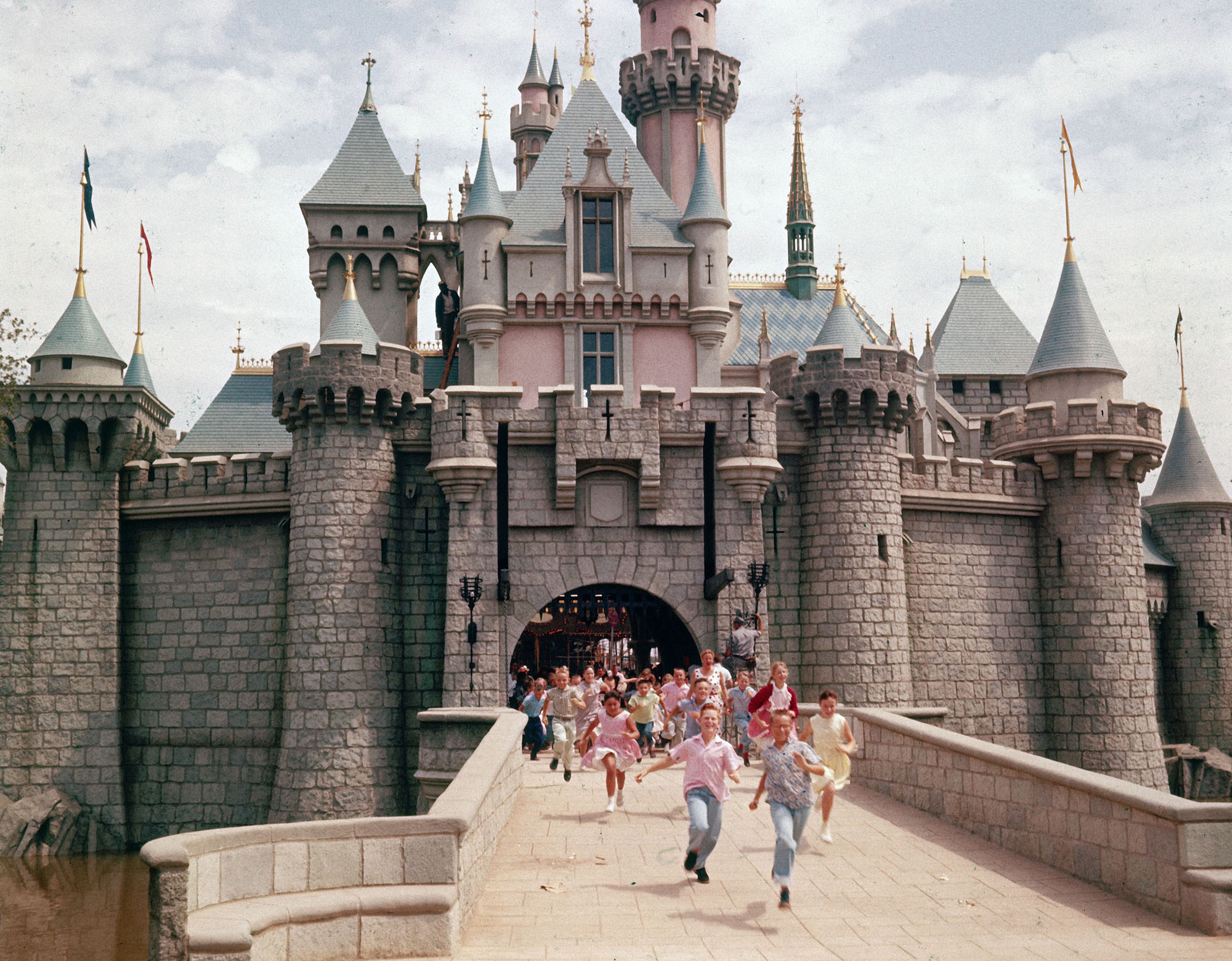
Centered around Sleeping Beauty Castle, Fantasyland featured classic Disney stories brought to life. Opening-day attractions included:
- Peter Pan’s Flight
- Mr. Toad’s Wild Ride
- Snow White’s Adventures
- King Arthur Carrousel
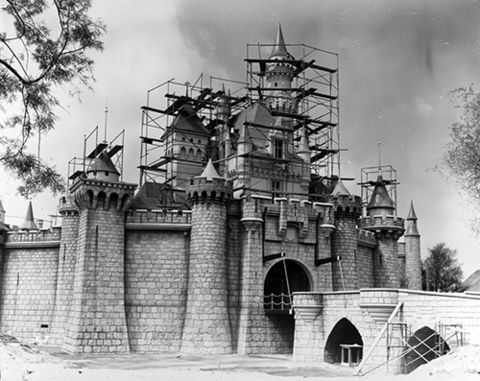
Unlike today’s ornate castle, the 1955 version was smaller and simpler — but just as magical. On the map, the castle stood proudly at the center, symbolizing Disney storytelling at its finest.
Fantasyland truly defined what made Disneyland different from other amusement parks.
Tomorrowland: A Glimpse Into The Future

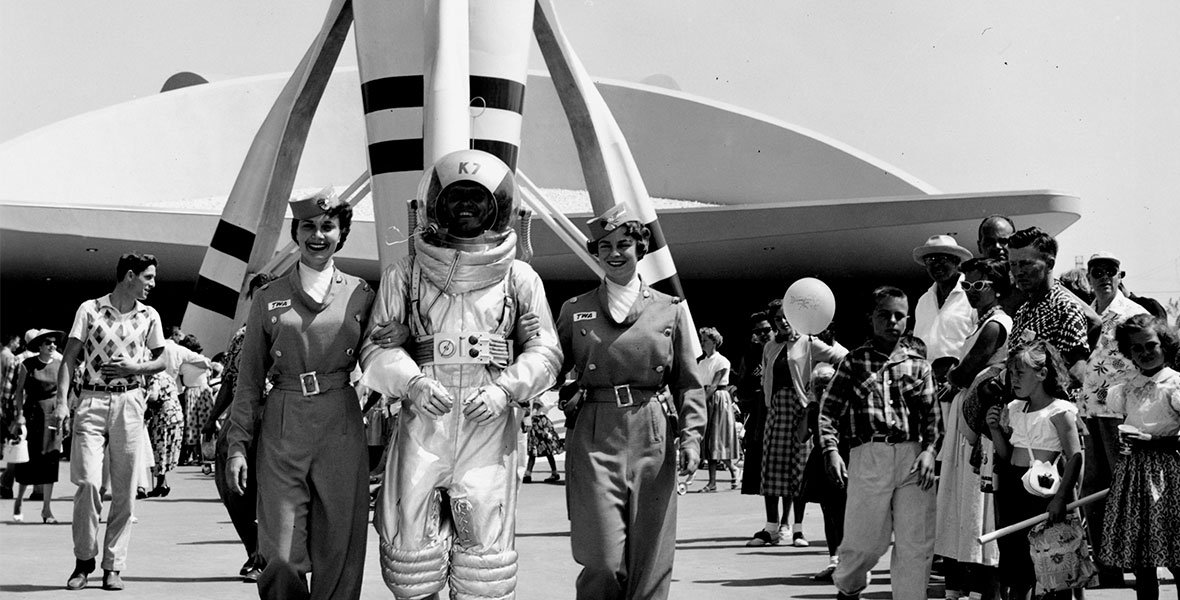

Tomorrowland was Walt Disney’s optimistic vision of the future. The 1955 map depicted it as sleek, modern, and forward-thinking.
Opening attractions included:
- Autopia
- Rocket to the Moon
- 20,000 Leagues Exhibit
Although technology was limited in 1955, the idea behind Tomorrowland was ambitious: inspire guests about science and progress.
The map artwork gave Tomorrowland a futuristic feel — sharp lines, rockets, and motion — even if the real-world technology was still catching up.
The Design Style Of The Disneyland 1955 Map
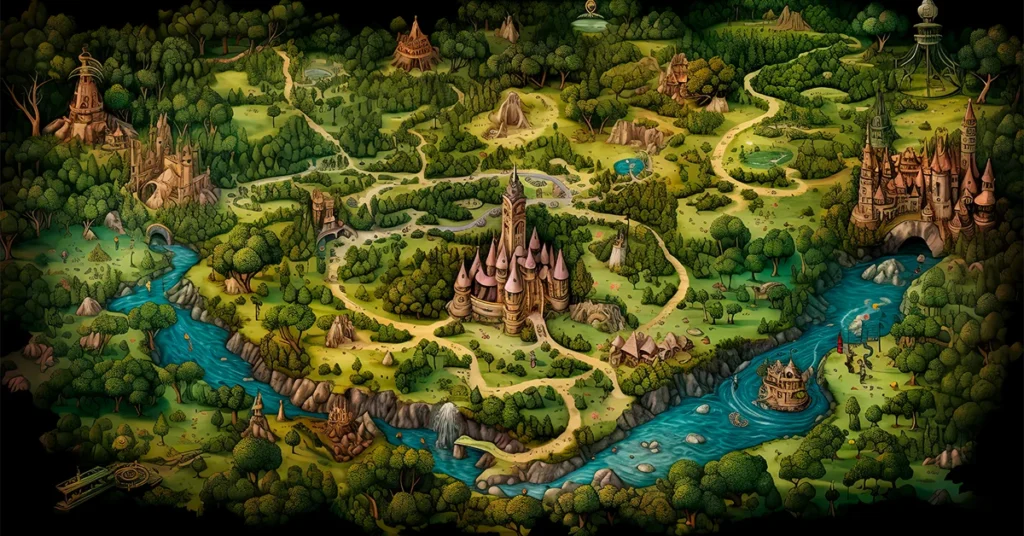
The original Disneyland 1955 map wasn’t a flat, technical diagram. It was hand-drawn and full of personality.
It featured:
- A bird’s-eye perspective
- Bright colors
- Illustrated attractions
- Animated-style details
Rather than focusing on precise scale, the map emphasized storytelling. It encouraged guests to explore and imagine.
In many ways, the map functioned like a movie poster — building excitement before the adventure began.
Why The 1955 Map Was Revolutionary
Before Disneyland, amusement parks didn’t organize attractions into immersive lands. They were collections of rides placed wherever space allowed.
The Disneyland 1955 map introduced:
- The hub-and-spoke design
- Themed environments
- Visual storytelling through layout
- Emotional journey planning
This map set the standard for theme park design worldwide. Parks across the globe later adopted similar layouts.
It wasn’t just a guide — it was a master plan for immersive entertainment.
Changes After Opening Day
Opening day wasn’t perfect. In fact, July 17, 1955, is sometimes called “Black Sunday” due to technical issues and overwhelming crowds.
Some attractions weren’t ready. Others were modified shortly after. As Disneyland evolved, so did its maps.
New rides were added. Lands expanded. Details became more refined.
But the 1955 map remains special because it captures Disneyland in its purest form — Walt Disney’s original vision on paper.
The Disneyland 1955 Map As A Collector Item
Today, the original Disneyland 1955 map is a treasured collectible.
Vintage copies can sell for thousands of dollars, especially if they are in good condition. Disney enthusiasts and history lovers value it because it represents:
- The birth of modern theme parks
- Walt Disney’s dream becoming reality
- A snapshot of 1950s American culture
Reprints are widely available, allowing fans to frame and display a piece of Disney history in their homes.
Hidden Details You Might Miss
If you look closely at the Disneyland 1955 map, you’ll notice small artistic touches:
- Whimsical illustrations of boats and trains
- Tiny buildings drawn in exaggerated style
- Pathways designed to subtly guide foot traffic
The map wasn’t random. It was carefully crafted to influence how guests moved and what they saw first.
That level of intentional design was groundbreaking at the time.
How The 1955 Map Influences Modern Disney Parks
Modern Disney parks — from Walt Disney World to Tokyo Disneyland — still follow the hub-and-spoke concept introduced in 1955.
Even today:
- A central icon (like Cinderella Castle) anchors the park
- Lands branch outward
- Maps emphasize story over scale
The DNA of the Disneyland 1955 map is still alive in every Disney park worldwide.
Why The Disneyland 1955 Map Still Matters
More than 70 years later, the original map continues to inspire designers, artists, and dreamers.
It reminds us that:
- Big ideas start with simple sketches
- Storytelling can shape physical space
- Imagination can transform an empty orange grove into magic
The Disneyland 1955 map isn’t just nostalgia. It’s proof that thoughtful design and bold vision can change an industry.
Conclusion
The Disneyland 1955 map represents more than directions through a park. It symbolizes the beginning of themed entertainment as we know it.
When Walt Disney first unfolded that map, he wasn’t just showing rides. He was inviting guests into stories.
Today, whether you’re a lifelong Disney fan or someone discovering the park’s history for the first time, exploring the original Disneyland 1955 map offers a fascinating glimpse into the birth of magic.
Sometimes, the most powerful journeys begin with a simple map.
FAQs
What is the Disneyland 1955 map?
The Disneyland 1955 map is the original park map created for Disneyland’s opening year. It illustrated the five themed lands and guided guests through Walt Disney’s revolutionary park design.
How many lands were on the original 1955 Disneyland map?
There were five original lands: Main Street, U.S.A., Adventureland, Frontierland, Fantasyland, and Tomorrowland.
Why is the Disneyland 1955 map considered important?
It introduced the hub-and-spoke layout and immersive themed lands, influencing theme park design around the world.
Are original 1955 Disneyland maps valuable today?
Yes, authentic 1955 maps are highly collectible and can be worth thousands of dollars depending on condition.
Can you buy a reprint of the Disneyland 1955 map?
Yes, high-quality reprints are widely available for collectors and Disney fans who want to own a piece of theme park history.
ALSO READ: Los Bridgerton El Duque Y Yo Analisis: A Romantic Breakdown