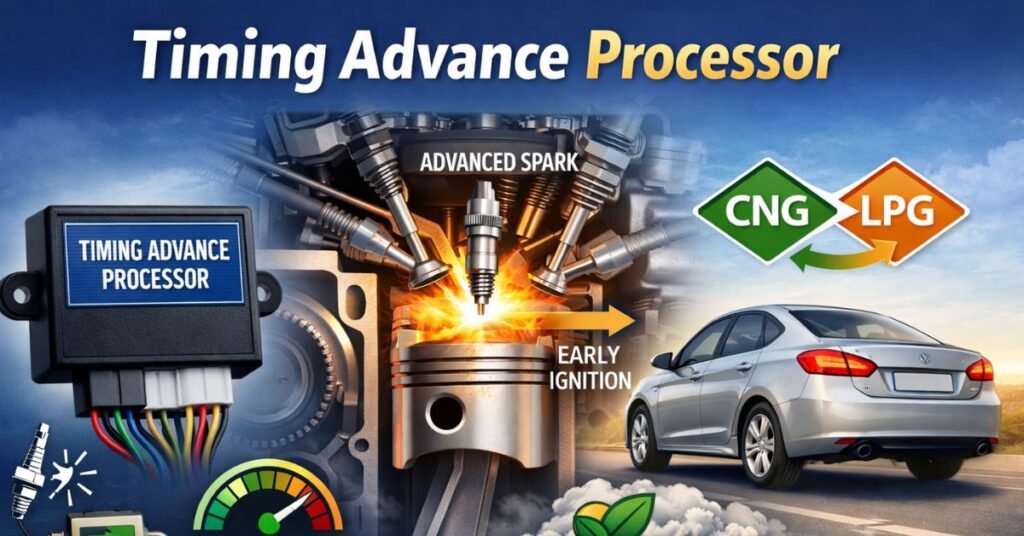
A timing advance processor (TAP) is an electronic device used in vehicles—especially those running on CNG or LPG fuel systems—to adjust the ignition timing of an engine. By advancing the spark timing, the processor helps the engine burn alternative fuels more efficiently.
As more vehicles adopt dual-fuel systems for cost savings and environmental benefits, timing advance processors have become an important component for maintaining engine performance. Without proper ignition timing adjustments, engines running on CNG or LPG can lose power, reduce fuel efficiency, and experience rough performance.
In simple terms, a timing advance processor ensures the engine’s spark occurs at the optimal moment for alternative fuels, improving overall driving performance.
Why Timing Advance Processors Matter Today
Modern engines are carefully tuned for petrol or gasoline combustion characteristics. However, fuels like CNG (Compressed Natural Gas) and LPG (Liquefied Petroleum Gas) burn differently.
These fuels:
- Have higher octane ratings
- Burn slower than petrol
- Require earlier spark timing
Without adjusting the timing, drivers may experience:
- Reduced engine power
- Poor throttle response
- Increased fuel consumption
- Engine knocking or hesitation
A timing advance processor solves this issue automatically by modifying the signal sent to the ignition system when the vehicle runs on alternative fuel.
This small electronic module can significantly improve how a converted vehicle performs.
What Is a Timing Advance Processor?
Direct Answer
A timing advance processor is an electronic control module that modifies the ignition timing signal so the spark plug fires earlier than the factory engine control unit (ECU) timing.
Why This Is Necessary
Engines running on CNG or LPG require earlier ignition timing because these fuels burn slower than gasoline.
The processor works between the engine sensors and the ECU, adjusting signals to advance the ignition timing when alternative fuel is used.
Key Components
Most timing advance processors include:
- A microcontroller that calculates ignition timing adjustments
- Input connections from crankshaft or camshaft sensors
- Output signals to the engine ECU or ignition coil
- Switch logic to detect fuel type (petrol vs CNG/LPG)
Some advanced models also allow programmable timing curves for different engines.
How a Timing Advance Processor Works
Direct Answer
A timing advance processor intercepts the engine’s position sensor signals and slightly shifts them to trigger earlier spark ignition.
Step-by-Step Operation
- Sensor Detection
The processor reads signals from the crankshaft or camshaft sensor. - Fuel Mode Recognition
When the vehicle switches from petrol to CNG/LPG, the processor activates. - Signal Adjustment
The device alters the timing signal sent to the ECU. - Earlier Ignition Spark
The ECU fires the spark plug earlier than normal. - Improved Combustion
The slower-burning alternative fuel now burns efficiently.
Result
Drivers typically experience:
- Better engine power
- Smoother acceleration
- Improved fuel efficiency
- Reduced engine strain
When a Timing Advance Processor Is Needed
Direct Answer
A timing advance processor is typically required in vehicles converted from petrol to CNG or LPG.
Common Use Cases
You may need a timing advance processor if:
- Your vehicle uses a CNG conversion kit
- The engine feels underpowered on gas
- Fuel economy drops after conversion
- Acceleration becomes sluggish
- The engine hesitates or misfires on CNG
Vehicles That Often Use TAP Devices
Timing advance processors are commonly installed in:
- Taxi fleets running on CNG
- Commercial vehicles converted to LPG
- Older vehicles with aftermarket fuel conversion kits
Modern factory CNG vehicles may already have timing optimization built into their ECU.
Benefits of Using a Timing Advance Processor
Direct Answer
The primary benefit of a timing advance processor is optimized combustion when running on alternative fuels.
Key Advag ignition timing helps restore performance lost after fuel conversion.
2. Better Fuel Efficiency
Proper combustion improves mileage on CNG or LPG.
3. Smoother Engine Operation
Drivers often notice smoother acceleration and reduced hesitation.
4. Reduced Engine Stress
Better combustion reduces incomplete fuel burning.
5. Lower Emissions
Efficient burning produces fewer harmful exhaust gases.
Types of Timing Advance Processors
1. Fixed Timing Advance Processors
These devices apply a constant timing advance.
Pros
- Simple installation
- Lower cost
Cons
- Not optimized for different RPM ranges
2. Variable Timing Advance Processors
These processors adjust ignition timing based on engine speed and load.
Pros
- Better performance
- More precise ignition timing
Cons
- Higher cost
- More complex setup
3. Programmable Timing Advance Modules
Advanced systems allow custom timing curves for different engines.
These are typically used in:
- Performance vehicles
- Professional CNG installations
- Engine tuning environments
Installation Overview
Direct Answer
A timing advance processor is installed between the engine sensor wiring and the ECU, usually near the engine control module.
Basic Installation Steps
- Locate the crankshaft or camshaft position sensor wiring
- Connect the processor input to the sensor
- Connect the processor output to the ECU
- Attach the fuel-mode signal wire from the CNG/LPG system
- Secure the processor module in the engine bay
Important Tip
Installation should ideally be done by:
- Professional mechanics
- Authorized CNG conversion centers
Incorrect wiring can cause engine errors or ignition issues.
Common Myths About Timing Advance Processors
Myth 1: All CNG Vehicles Need a TAP
Not always. Some modern ECUs automatically adjust ignition timing.
Myth 2: TAP Devices Damage Engines
When installed correctly, they improve combustion and engine performance.
Myth 3: They Increase Fuel Consumption
In reality, correct ignition timing usually improves fuel efficiency.
Practical Tips Before Buying a Timing Advance Processor
If you’re considering installing a TAP device, keep these points in mind:
Check ECU Compatibility
Different engines require different processor configurations.
Choose Quality Hardware
Look for reliable manufacturers known for automotive electronics.
Ensure Professional Installation
Improper wiring can trigger check engine lights or ignition problems.
Verify Timing Settings
Optimal timing varies depending on:
- Engine design
- Fuel type
- Driving conditions
Conclusion
A timing advance processor is a valuable device for vehicles running on CNG or LPG fuel systems. By adjusting ignition timing, it ensures that alternative fuels burn efficiently, restoring engine power and improving fuel economy.
As alternative fuels continue to gain popularity due to rising fuel prices and environmental concerns, proper ignition management becomes increasingly important. A well-installed timing advance processor helps vehicles run smoother, cleaner, and more efficiently.
For drivers using dual-fuel vehicles, understanding how this small electronic module works can make a significant difference in overall engine performance and long-term reliability.